
Rethinking Indirect Costs
What the FAIR Model Means for Research

I really love writing grants and planning studies. It’s the space where I get to be creative, to imagine what’s possible with the right resources, and sometimes to build what doesn’t yet exist. But the truth is, working at a well-resourced institution means I’ve been able to take a lot for granted. Behind every grant submission and funded study are teams making the machine run: compliance staff, grants administrators, IRB reviewers, IT and information security folks, data storage systems, HR processes—the invisible infrastructure of research. I don’t see these people every day, but I benefit from their work constantly.
Which brings us to indirect costs.
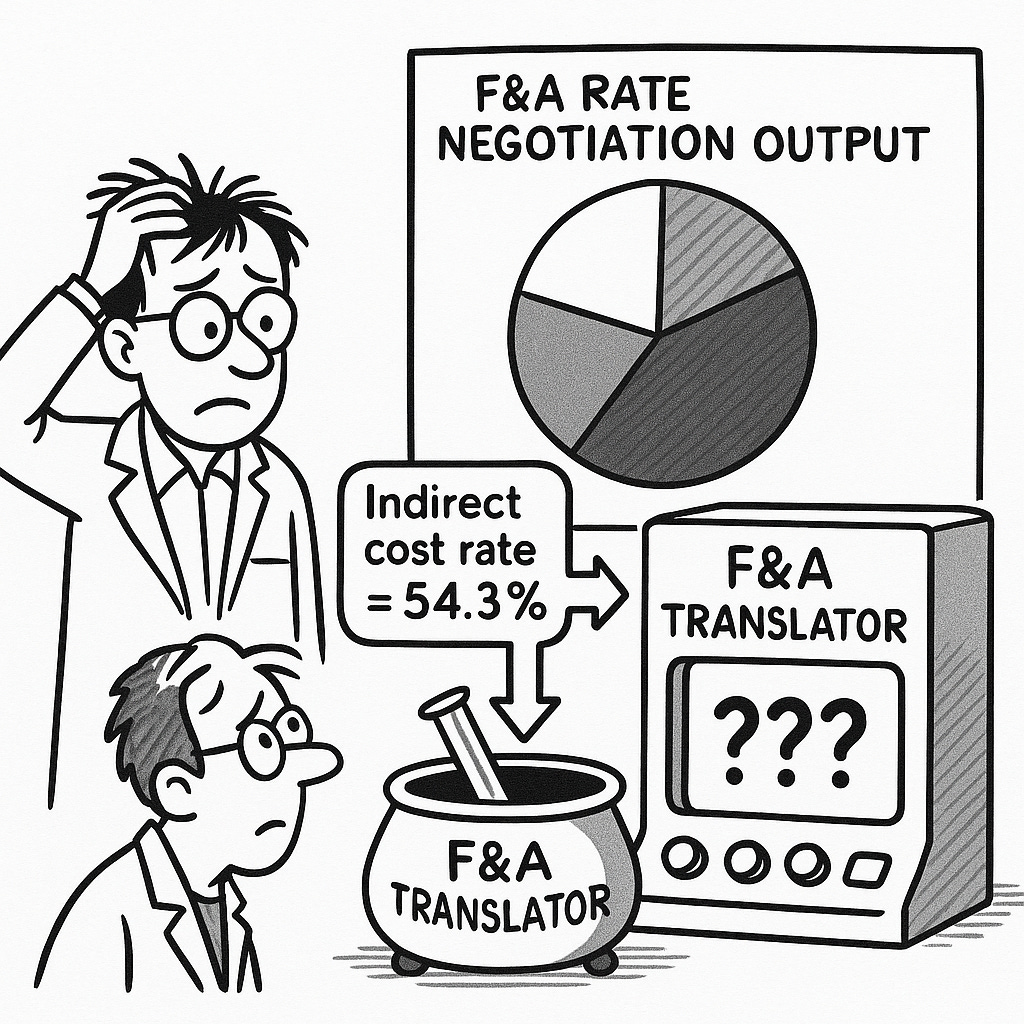
You might’ve heard about recent proposals from the administration to cap indirect costs, potentially as low as 15%. These proposals have forced the research community to think more deeply about everything that those funds support.
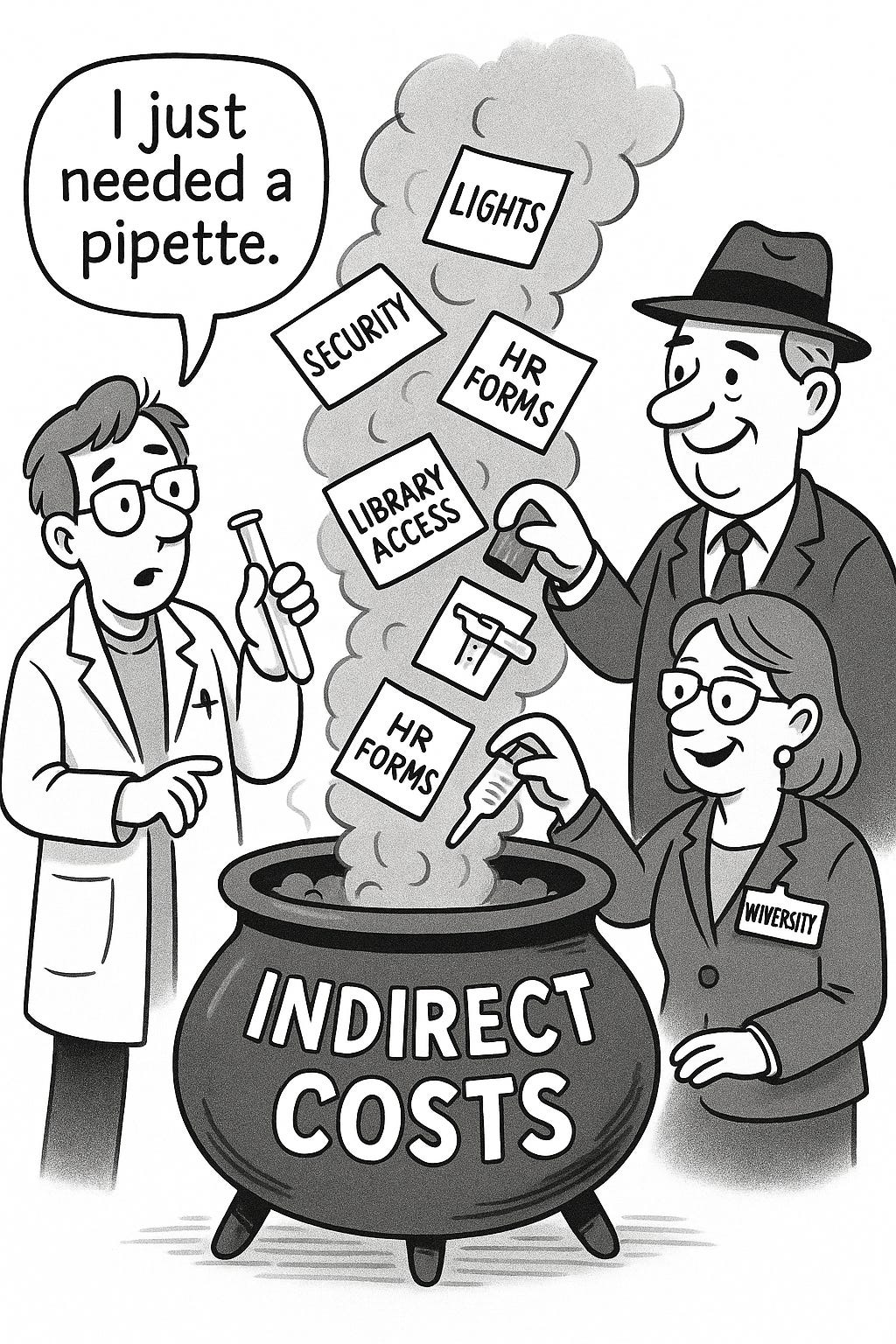
Here’s the challenge: indirect costs are hard to explain. What does the public get for a 50% or 60% indirect rate? Why does it vary from one university to another? Rates are negotiated behind closed doors, and it’s no surprise that many policymakers and even researchers see the whole process as opaque. [side note: there are now many materials with pretty figures that actually describe this quite well – find some of those in the references below!]
Enter the FAIR Model
Thankfully, a group of research associations, together forming the Joint Associations Group (JAG), stepped up. They organized an open, fast-moving, collaborative process involving subject matter experts, more than 2,000 community contributors, and 175 institutions that tested the proposals. The result is the FAIR model, which stands for Financial Accountability in Research.
The goal? Improve transparency, accountability, fairness, and efficiency in research funding. And it’s a solid step in the right direction.
Here’s what stands out:
It eliminates the need for indirect rate negotiations—saving everyone time and money.
It creates standardized categories that clearly name what the money is paying for.
It’s designed to work across all institutions.
And most importantly, it allows for auditable, visible, measurable spending.
What’s Actually in the FAIR Model?
Rather than a single F&A percentage, FAIR breaks out costs into three main buckets:
Research Performance Costs (RPC): These are the traditional “direct costs”—PI salary, staff, travel, supplies, etc.
Essential Research Performance Support (ERPS): These are the costs that used to be buried in the indirect rate but are now tied to individual projects. They include:
Regulatory Compliance (RC): IRB, biosafety, radiation safety, research security, clinical trial oversight.
Award Monitoring, Oversight and Reporting (AMOR): Grant administration and reporting.
Research Information Services (RIS): Access to journals, databases, repositories.
Essential Research Performance Facilities (ERPF): Project-specific facility costs—space, maintenance, depreciation.
General Research Operations (GRO): These are the centralized support costs that can’t be pinned to a single project—HR, procurement, benefits, and more.
Two Options: Expanded vs Base
FAIR gives institutions two ways to implement this:
Expanded Option: Institutions charge ERPS components directly to the project budget. It’s more accurate but requires strong administrative infrastructure and is likely a better fit for larger research centers.
Base Option: Simpler. A flat 15% for GRO, plus 10% for RIS and ERPF. Easier to manage and more accessible for smaller or less-resourced institutions.
Importantly, institutions pick one path across all their federal grants—no mixing and matching by agency or PI.
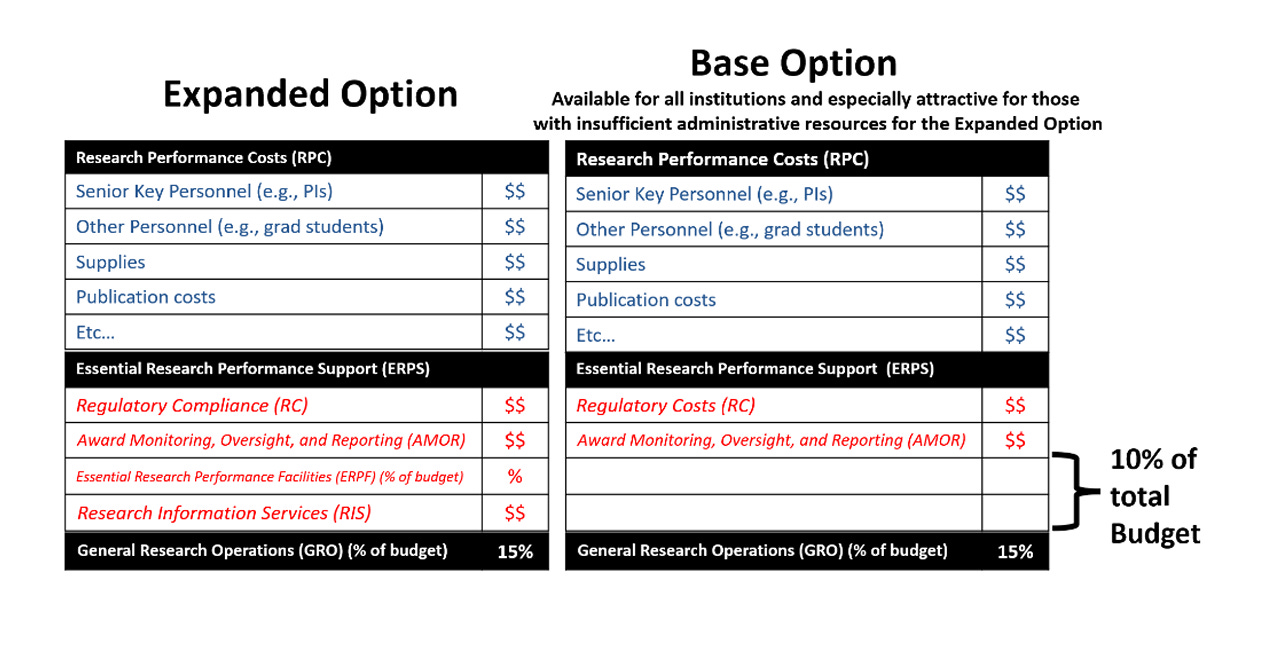
*This figure is directly from the PDF of the FAIR Final model referenced below
Why This Matters
I like this model. It puts names to the things we’re paying for. It’s easier to understand, easier to explain, and, maybe most importantly, it helps justify to policymakers and the public why these costs exist in the first place.
The FAIR model still has a road ahead—it will require action from OMB and potentially Congress to become reality. But it marks a significant, collaborative step toward building a more sustainable and transparent research ecosystem. It’s a timely reminder that research isn’t just about ideas; it’s also about the systems, people, and infrastructure that make discovery possible. And all of that needs support. What gives me hope is that our entire community is coming together to tackle these challenges head-on.
References:
https://fabbs.org/news/2025/07/jag-announces-final-fa-model/
Video from 7/15 describing the final model:
https://www.aau.edu/key-issues/financial-accountability-research-fair-model
https://www.congress.gov/crs-product/R48540
Video about F&A/Indirects: https://www.aau.edu/key-issues/research-administration-regulation/f-and-a-costs-research
My disclosures:
I am an academic rheumatologist, epidemiologist, and mom. My research is funded by the NIH, private foundations, pharmaceutical companies, and philanthropy. I consult for and work with pharmaceutical companies in my research. I am co-founder of a non-profit organization and founder of Research Pathfinder, LLC. My thoughts are my own and not reflective of my employer.
Love this and was unaware of this initiative. Indirects impact other funding mechanisms too; appreciate that this approach could make things more manageable for those as well. Transparency helps make institutions more accountable for how funding dollars are being spent.